

It’s 3 p.m. on a Tuesday. The provost needs a retention analysis by Thursday. The data lives in Colleague. And Canvas. And Slate. And your student-success platform. And a finance spreadsheet someone in the bursar’s office emailed you last month.
So you do what you always do: you become the middleware. You pull from five systems, paste into Excel, clean the formatting, reconcile the IDs, and hope you don’t introduce an error that undermines the whole analysis.
This isn’t just an IR problem. It’s a financial aid problem when your team needs to reconcile disbursement data across three platforms before a federal deadline. It’s a registrar problem when enrollment numbers don’t match between the SIS and the LMS. It’s a CFO problem when headcount data and cost data live in different universes. And a new dashboard for your SIS doesn’t fix any of it.
The Bottleneck Isn’t Your SIS Reporting
Ellucian Insights does what it’s designed to do: it connects to your Ellucian SaaS data and gives you dashboards for enrollment, financial aid, and student records. That’s valuable. Nobody’s arguing otherwise.
But here’s a question worth sitting with: how much of your week actually lives inside a single system?
The capacity crisis on campus isn’t confined to one office. AACRAO’s 2024 Registrar Career Profile found that 34% of registrars plan to change roles or retire within three years. Think about what that means for yours. The people who hold together your enrollment verification, your degree audits, your compliance reporting. A third of them are eyeing the door.
And it’s not just the registrar’s office feeling the squeeze. When AIR surveyed 390 institutional research and data professionals about the ACTS reporting requirement earlier this year, 91% said staff capacity was a moderate or major challenge, with findings consistently pointing to “the complexity of managing data across multiple systems” as one of three central barriers shaping the reporting experience.
That’s not an IR-specific complaint. That’s a campus reality. Every office that touches student data (financial aid, enrollment, academic affairs, the registrar) runs into the same wall. The joining. The reconciling. The hours spent wrangling exports into alignment when the actual analysis hasn’t even started yet.
Insights gives you dashboards for the data inside your Ellucian environment. But your financial aid director still needs disbursement data reconciled against the finance system. Your registrar still needs enrollment numbers that account for LMS activity and early-alert flags. Your CFO still needs headcount blended with cost data from a completely different platform. One connection, no matter how well built, doesn’t reach the rest of the systems those offices depend on every day.
What “Unlimited Integrations” Actually Means for Your Campus
Informer connects to all your data, wherever it lives. Colleague, Banner, Canvas, Slate, your finance system, your HR platform, your student-success tools. Unlimited integrations, not just the ones inside the Ellucian ecosystem.
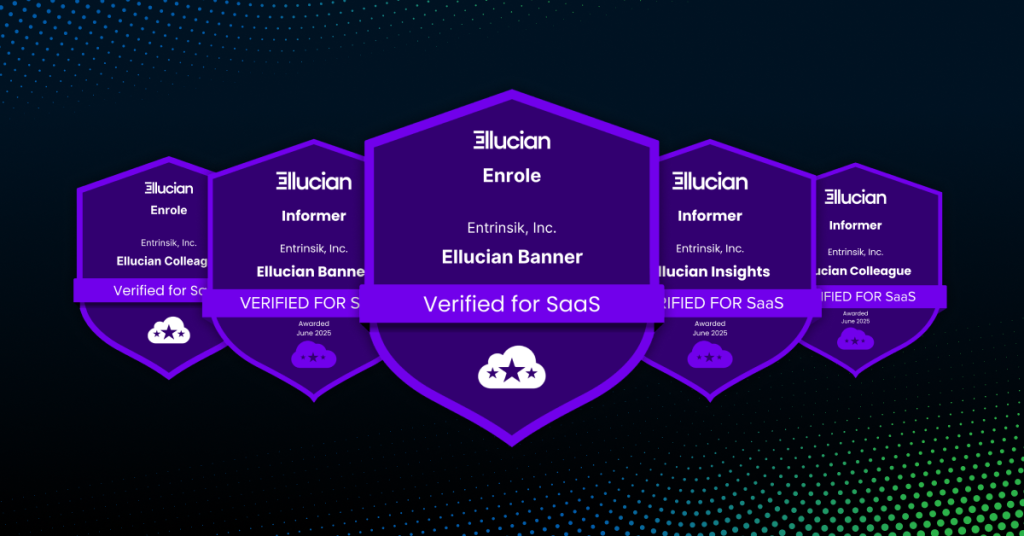
And here’s what matters: Informer is Ellucian SaaS Verified for both Colleague and Banner. It connects directly to the Ellucian Insights data lake, too. So you’re not choosing between your SIS and everything else. You’re getting your SIS data and every other source your institution depends on, governed under one security model.
What does “governed” actually look like? Informer enforces role-based access controls and row-level security on every query, every Dataset, every report. Your financial aid staff sees only the student records their FERPA authorization covers. A department head pulling enrollment data for their college can’t accidentally access another department’s records. Every data interaction carries an audit trail. And the platform maintains SOC 2 Type II compliance, so when your CISO asks how student data is protected in a self-service environment, you have a real answer, not a reassurance.
That’s what makes self-service safe enough for a registrar to trust. You’re not handing everyone the keys and hoping they stay in their lane. The security model travels with the data, no matter which system it came from or who’s asking.
The same Dataset that pulls retention cohorts from Colleague can blend in LMS engagement data from Canvas and early-alert flags from your student-success platform. One query, one governed view, one answer. Not five exports and a reconciliation spreadsheet you’ll rebuild from scratch next semester.
Think about what that means for a two-person team. Instead of spending Monday pulling data and Tuesday cleaning it, you spend Monday asking questions and Tuesday acting on the answers. That’s true whether you’re in IR, financial aid, or enrollment management.
Replacing Informer with Insights Doesn’t Simplify Your Stack
If your institution is evaluating whether Insights can replace Informer, the logic seems clean on the surface: consolidate vendors, simplify the stack, reduce cost.
But run the scenario forward. Insights covers your Ellucian data. What happens to the Canvas reports your academic affairs VP relies on? The Slate funnel analysis your enrollment team runs weekly? The finance data your CFO needs blended with headcount numbers for the board?
Those don’t go away. They just go back to being your problem to stitch together manually. Or they become a new software purchase. Or they become an integration project for an IT team that’s already stretched thin.
You haven’t simplified anything. You’ve pushed the complexity back onto the people least able to absorb it.
Edison State tells a different story. Edison State reduced federal loan disbursement review from 120 staff hours to 1 hour per cycle. That’s not an SIS dashboard win. That’s the result of connecting financial aid data, student records, and compliance rules in one governed workflow. Edison State also avoided a $60,000 third-party software cost by building Ohio Financial Cost & Aid Disclosure compliance directly in Informer.
NICC uses Informer to recover thousands of dollars in previously uncollected tuition revenue per semester through automated dropped-registration invoicing. That’s enrollment ops and the bursar’s office working from the same governed data.
Neither of those outcomes comes from a tool that only reaches your SIS.
The Capacity Problem is Campus-Wide
Here’s a concrete version of the problem. Your financial aid office needs to verify disbursement eligibility before a federal deadline. The student records live in Colleague. The enrollment intensity data is in the LMS. The satisfactory academic progress rules reference a policy document on a SharePoint drive. And the actual disbursement amounts come from the finance system. Four systems, one answer needed, and a deadline that doesn’t care how many tabs you have open.
The expectations on every data-facing office are expanding while the teams stay the same size.
A reporting tool that covers one system doesn’t address that gap, no matter how good its dashboards are. You need the financial aid director to pull her own disbursement reconciliation without filing a ticket with IR. You need the registrar to answer the provost’s enrollment question in ten minutes instead of two days. You need the CFO to blend headcount and cost data for the board without waiting on IT to build a new extract. And you need all of those people drawing from the same governed data, no matter which system it started in, with FERPA-appropriate access baked into every query rather than bolted on after the fact.
A fair question at this point: how long before those people can actually self-serve? Nobody wants to sign up for an 18-month implementation that only IT can maintain. Informer connects directly to your existing systems. Your SIS data is available through the same Ellucian SaaS Verified integration your IT team already trusts. New Datasources and Datasets can go live in days, not quarters. And because security inherits from the governance model you’ve already configured, adding a new office to the platform doesn’t mean rebuilding permissions from scratch. You extend access; you don’t re-architect it.
Mid Michigan College used Informer to standardize their state and federal compliance templates so that updates now require only a data refresh instead of a manual rebuild every cycle. That’s the difference between spending reporting season buried in spreadsheets and spending it actually analyzing the data you’re submitting.
At Fresno Pacific University, the registrar’s office used Informer to build live enrollment visualizations that show student movement term to term at a glance. Jeff Jones, Associate Registrar, called the result “visually engaging, communicating information clearly, effectively, and with the right level of detail.” No more pulling static headcount reports from the SIS and manually reconciling them for the cabinet. The data updates itself, governed and ready, and the registrar’s office stops being the bottleneck for every enrollment question that walks through the door.
That’s the real payoff of connecting all your data under one governed platform: the people who used to spend their time stitching systems together start spending it on the work they were actually hired to do. Financial aid runs disbursement reviews in an hour instead of a week. The registrar’s office answers enrollment questions with live visualizations instead of static pulls. Compliance reporting becomes a data refresh, not a rebuild. None of that happens when your platform can only see one system.
What Comes Next
If you’re running Informer today, you already have this. Your SIS connection, your Canvas data, your finance system, your compliance workflows, all governed under one roof. Insights doesn’t replace that. It replaces a piece of it.
If you’re evaluating your options, start with the inventory you already know by heart: every system you pull from in a given month, every export you paste into a spreadsheet, every reconciliation you do by hand. That’s the scope of the problem. Match your tools to that, not to a single vendor’s ecosystem.
See how Informer connects to your data, wherever it lives →
Sources
- AACRAO 2024 U.S. Registrar Career Profile (34% of registrars plan role changes or retirement within three years): https://www.aacrao.org/research-publications/aacrao-research/2024-summary-of-u.s.-registrar-survey-aacrao-career-profile-series (Published December 2024)
- AIR ACTS Progress and Barriers Survey Report (survey of 390 IR and data professionals, 91% citing staff capacity as moderate or major challenge; “the complexity of managing data across multiple systems” as a central barrier): https://www.airweb.org/publication/acts-progress-and-barriers (Survey launched February 5, 2026; report published February 2026)